SPOCK = Synthesis Platform for Operational Cognition & Knowledge
A knowledge engine that remembers the way people do
It consolidates what has been confirmed, lets go of what goes unused, and updates what has changed.
RAG finds documents. SPOCK remembers what your organization knows.
SPOCK = Synthesis Platform for Operational Cognition & Knowledge
Storing documents and pulling out similar ones is search. SPOCK consolidates what has been confirmed, lets unused knowledge fade, and keeps what is certain apart from what is hearsay.
Knowledge confirmed again and again moves up, one stage at a time, until it becomes organizational knowledge. In RAG, every chunk has the same weight.
Knowledge that is not confirmed again gradually moves into the background. Knowledge that people have curated is never deleted.
Every relation is tagged as fact, plan or proposal. A "planned adoption" in a proposal does not turn into a signed contract.
When the AI proposes, people approve sentence by sentence. The veto always stays with people.
The more often knowledge is confirmed across documents and the more it is used, the higher it rises. If it is not confirmed again, it comes back down. The higher the stage, the fewer the items and the longer they last.
What is valid now, and what was valid then. Every fact carries the period during which it is valid. A revision replaces the old value, and the old version stays as history.
| Question | SPOCK | RAG |
|---|---|---|
| What is the travel allowance now? | KRW 100,000 per day version 3 · since 2025-07 | Passages for KRW 70,000, 80,000 and 100,000 can be retrieved together and get mixed |
| What was it in March last year? | KRW 80,000 per day version 2 · valid at that time | Filters "March last year" only by document creation date |
| What changed, and when? | 2024-07: KRW 70,000 → 80,000. 2025-07: KRW 80,000 → 100,000 | No link between versions, so the LLM guesses the comparison |
The example policy and amounts are illustrative.
It looks first at dates in the title, cover page and revision history. The file creation date does not fool it.
They are replaced but stay as history. For an audit, it restores the policy exactly as it was at that time.
Overdue, gone quiet and forgotten all come from this axis. Each fact needs a point in time before it can be counted.
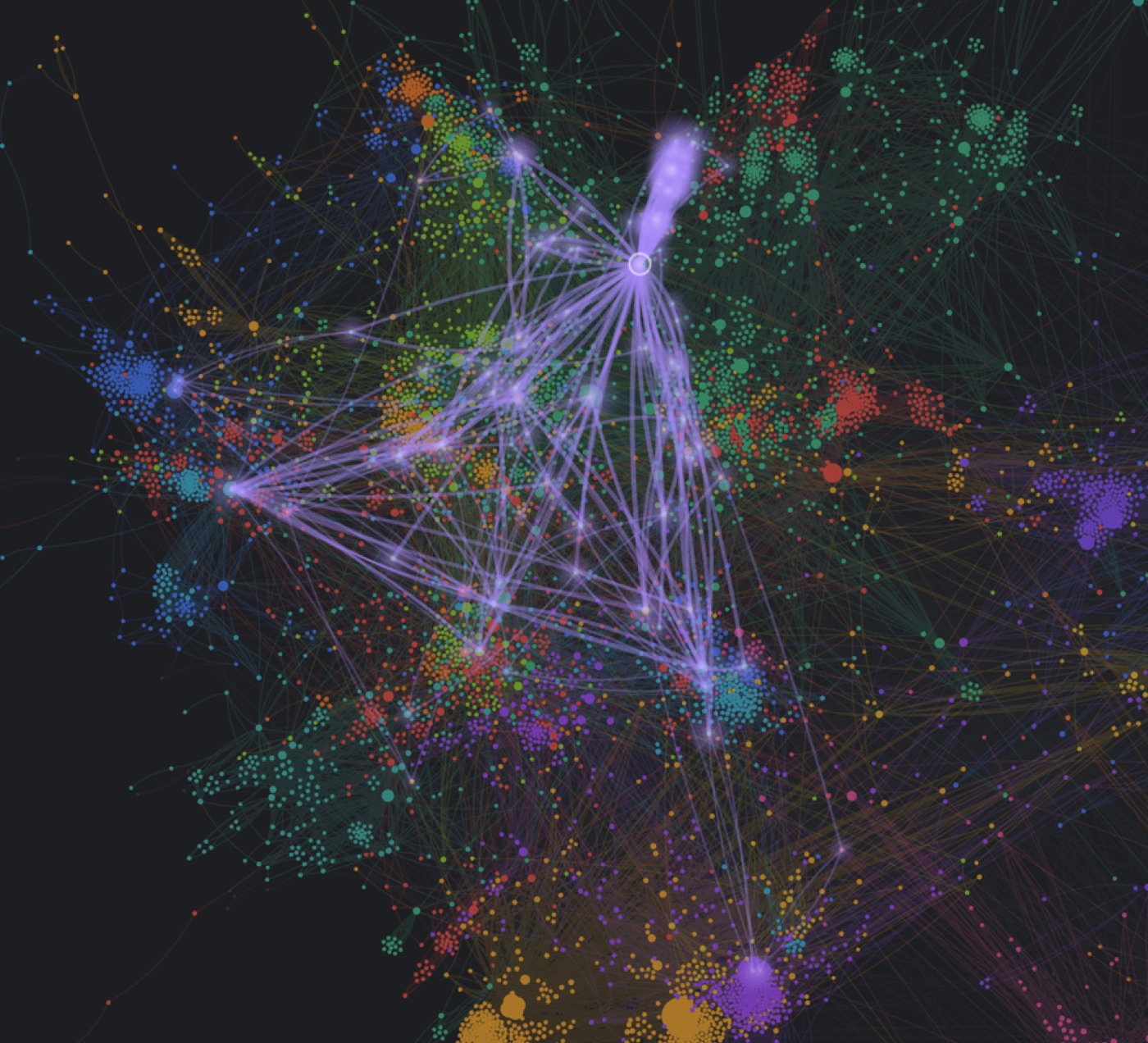
An organization's answers are rarely in one document. SPOCK keeps documents linked to each other, and answers by gathering facts scattered across them.
Example question: "How were the findings from this year's security audit addressed?"
The example is illustrative.
Facts written separately in reports, plans and meeting minutes come together in one answer.
Every document used in the answer is attached as a source. You can go straight back to the original text.
Source text search stays as it is, and a layer that links documents sits on top of it.
What has stalled, and what is about to. It counts stalled work and missing knowledge, and also the early signs of a stall. It raises them as signals before they turn into problems.
These signals are extracted by reading documents. It also catches work that should be moving but has not been mentioned for a while.
It shows the topics employees asked about but that had no evidence, with how often each was asked. Write a document right there, and the next question gets an answer.
Connections concentrated on one task, one result that many pieces of work depend on, documents where confirmed and proposed content diverge. It points to work, not to people, and people confirm anything that conflicts.
Every function is open through a standard API. Employees build their own work apps on the company's memory, and a new use case does not have to wait for custom development from a vendor.
It connects to the repositories you already use, such as groupware, drives and wikis, with the originals left in place. Documents are not moved.
In-house apps and AI agents go through the same permission checks as people, and every call is recorded in the audit log.
Customers build new use cases themselves. Customers also choose between an in-house LLM and an external LLM, and switch without redeploying.
Anywhere work leaves documents behind. There is one engine. What changes from one area to the next is the documents you connect and the apps you use.
"Rules are revised often, so old clauses get mixed into answers"
A revision replaces the old version. Ask about any point in time and it answers with the clause that was valid then.
"People check hundreds of RFP items one by one"
It finds supporting evidence for each requirement and assesses it, and flags the items a person needs to write.
"Deliverables are scattered, and no one knows what has been produced"
It links the planned deliverables of each schedule stage to the documents actually produced, and opens the latest version directly.
"Archived articles can be searched, but they are not connected"
It connects people, events and relations across articles, and drafts pieces that answer questions from readers.
"Documents pile up, and no one organizes them"
As documents come in, the wiki assembles and corrects itself. Permissions follow the org chart.
"Records are classified by hand"
It reads the type and nature of each document, suggests a classification that fits the institution's scheme, and a person confirms it.
Your core systems stay as they are, and SPOCK reads on top of them. Remove it and your systems keep running.
It has run on real documents on a single server with no internet access.
It can run on an in-house LLM alone, so documents never leave your network.
Documents are not moved or modified. SPOCK connects to the original repositories and reads from them.
In a demo, we show you what SPOCK remembers and connects from your documents.
Request a demoAdvanced Resource Planning is handled by WARP.